
Polyethylene Speed Humps - How effective are they?
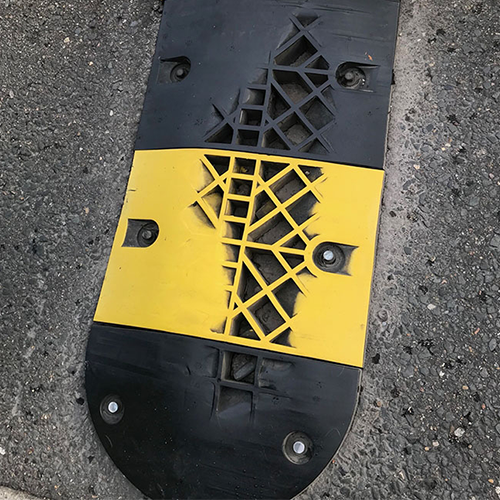
We believe clients should have two key expectations when purchasing speedhumps for their site. One, that they are effective in controlling speeds and two, that they are going to perform well over many years. The past few years has seen an increase in speed humps manufactured from low density polyethylene (LDPE), they are relatively cheap to produce and have a bright yellow finish that makes them look great. Unfortunately, whilst boasting an economical selling cost, the speed humps come with a significantly decreased product lifespan. We are finding that LDPE speed humps simply do not cope with large volumes of traffic (eg. a shopping centre car park). The weaker chemical bonds in the LDPE humps are resulting in some pretty fast wear times. We have shown an example below, but dont take our word for it, go check your local car parks and you'll find similar results.
We have made sure to manufacture our range of speed humps from either high density, crush resistant rubber or a highly durable thermoplastic that has proven to last 5+ years in high traffic areas. Below are image comparisons of the cheaper polyethylene product and our highly durable thermoplastic.
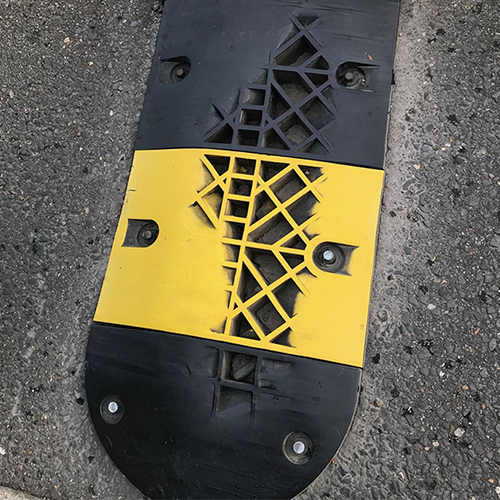
Low density polyethylene (LDPE) - 18 months in a shopping carpark
|
|
|
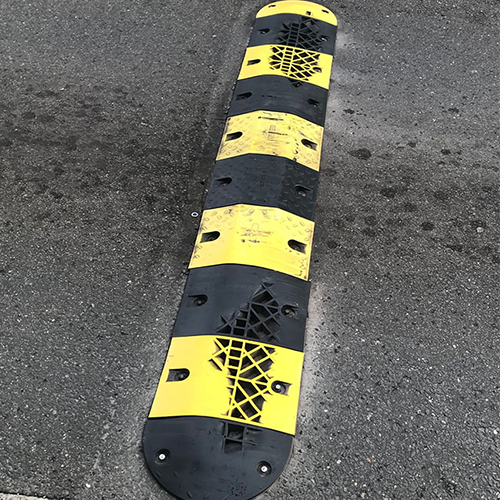
PWS Thermoplastic Speedhump - 6 years in a high traffic warehouse carpark
|
|
|
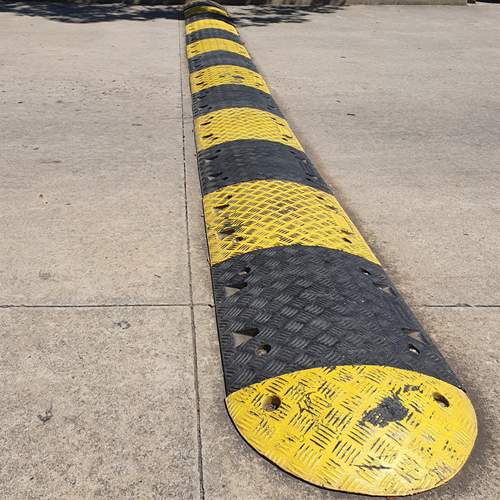
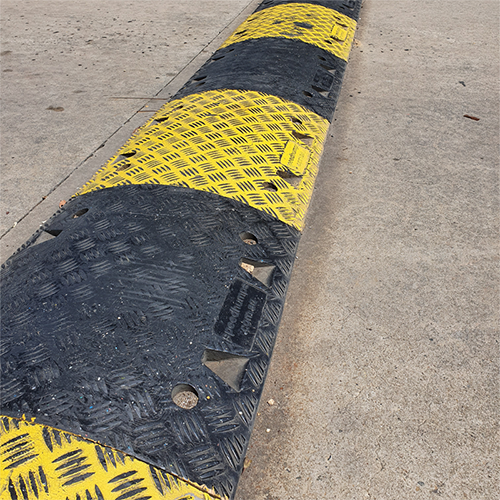
Within 18 months the low-density polyethylene alternative had worn down from 50mm to 10mm at its most worn parts compared to our thermoplastic speed hump that's only suffered minor paint ware after 6 years. It may be a slightly cheaper upfront cost, but the long-term cost of product replacement makes it a far more expensive option.
If you’d like to learn more about our products call us on 1300 76 44 77